Welcome to The Reagent: Your gateway to applied biochemistry

Dive deep into the molecular world with us. The Reagent is where biochemistry enthusiasts explore the intersection of biology and chemistry. Written by students, for students, we aim to connect the bridge between everyday life and the biochemistry behind it.

Smart Insulin- is this the future of diabetes treatment?

Insulin was discovered in 1921 and since then has transformed diabetes from a fatal condition to one that can be managed successfully. However, even with centuries of medical advances, insulin therapy still presents significant challenges. It can be incredibly inconvenient for those with diabetes to constantly monitor blood glucose levels, calculate insulin doses and balance diet, exercise and illness. Even with all of our modern technology, such as glucose monitors, maintaining stable blood sugar levels proves difficult. 

Read more »

The Myths and Facts of Your Body

Health superstitions get passed down by parents, repeated by teachers, and occasionally even stated by doctors who learned them decades ago and never had reason to update. What makes most of these myths interesting is not that they are obviously absurd - it is that they are almost always wrong in a specific and instructive way. They contain misapplied, oversimplified biology which is stretched well beyond what the underlying mechanism can actually support. This article picks apart three of the most common body and health myths and replaces them with what is actually happening at a molecular level, which, in every case, turns out to be more interesting than the myth it replaces.

Read more »

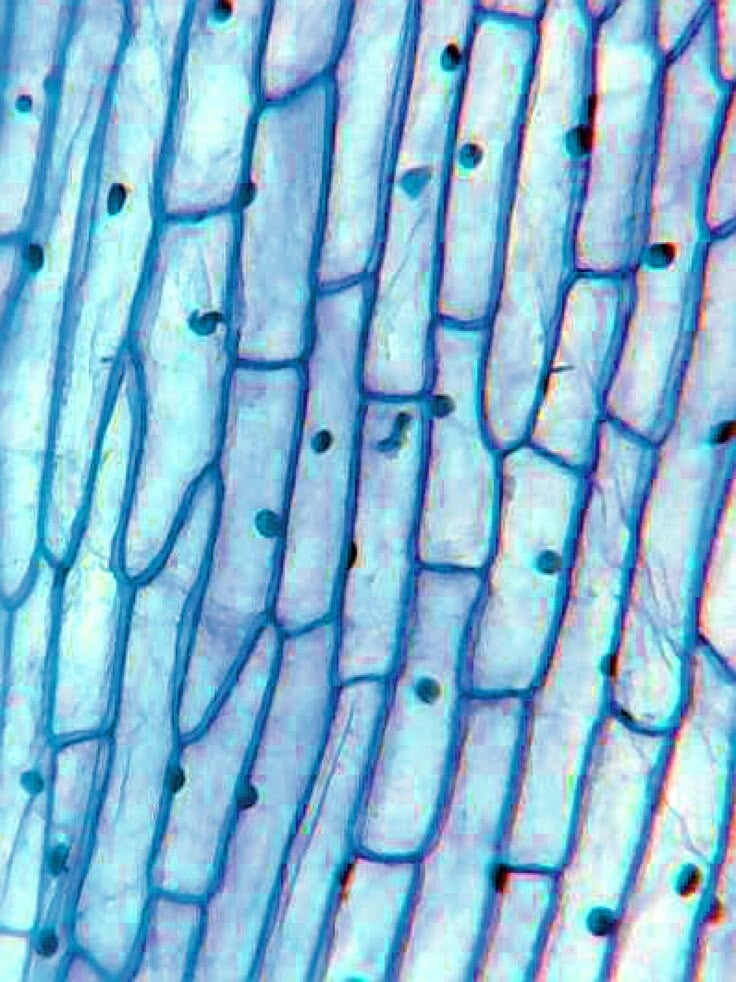
Why Do Onions Make You Cry?

Few kitchen experiences are as universal as chopping an onion and suddenly finding yourself fighting back tears. While it may seem like the onion is deliberately attacking your eyes, the real explanation lies in a fascinating series of chemical reactions that occur the moment you slice into it.

Read more »

What's Actually in Rhode?

Hailey Bieber's Rhode has become one of the most talked-about skincare launches in recent beauty industry history. The marketing language is impeccably curated - skin is "glazed", barriers are "restored", and everything is "nourishing". But what does any of it actually mean at a molecular level? This article strips back the branding and analyses the chemistry of three Rhode products - the Glazing Milk, the Barrier Restore Cream, and the new Bronzer ingredient by ingredient ahead of the summer drop on Tuesday.

Read more »

How Chirality Has Shaped Modern Drug Development

Your left hand and your right hand are mirror images of each other, where no matter how you rotate or flip one hand, it will never perfectly overlap the other. This property is called chirality, from the Greek word for hand, and it is one of the most consequential phenomena in all of pharmaceutical chemistry. Many molecules are chiral and getting chirality wrong can be the difference between a cure and a catastrophe.

Read more »

The Chemistry Behind Fireworks

Every year, millions of people watch fireworks explode and brighten the sky. From dazzling reds to brilliant blues, fireworks hook audiences with their vibrant colours, intricate patterns and loud bangs. These displays are actually the result of fascinating chemical reactions. A combination of elements and compounds transform a simple explosion into a fabulous display of science and art. 

Read more »

What UV Actually Does to Your DNA

As summer 2026 approaches, you spend a day at the beach. You meant to reapply sunscreen after swimming but got distracted. By evening, your skin is tight and red. By the next morning, it is painful to touch, and a few days later it starts peeling. Most people think of sunburn as a surface-level problem, a result of too much heat, too much light, and your skin just gets irritated. The reality is far more interesting and considerably more alarming. Sunburn is your body's response to molecular damage happening inside the nucleus of your skin cells. The redness, the pain, and the peeling  is the result of ultraviolet radiation chemically altering your DNA. 

Read more »

Asian Flush - The Biochemistry Behind the Blush

As a Singaporean-Chinese teenager growing up in London, the following situation is all too common. You're at a party. Two sips into a drink and your eyelids turn bright red, followed by your cheeks, and then your heart starts racing, and eventually nausea, while everyone around you looks completely fine. For roughly 540 million people worldwide, predominantly of East Asian descent, this is a familiar experience. Most people assume it is a sensitivity to alcohol, or perhaps an allergy. However, asian flush is the visible symptom of a genetic variant that disrupts one of the most critical detoxification pathways in the human body, with consequences that extend well beyond an embarrassing blush.

Read more »

Can Your Brain be Hacked? The Science of Habits and Dopamine

Have you ever gone on your phone for 5 minutes and ended up scrolling for an hour? I certainly have. These behaviours aren’t random, they are linked to how the brain is wired. One of the chemicals associated with this is dopamine. This is a hormone which is involved in motivation, learning and habits not just pleasure, it can affect our everyday behaviour. 

Read more »

The Bacteria That's Killing Dengue

Every year, an estimated 100-400 million people are infected with dengue virus worldwide, with about 400,000 annual deaths. It is one of the fastest-growing infectious diseases on the planet, fuelled by urbanisation and climate change pushing Aedes aegypti mosquitoes, the primary vector,  into new territories. However, despite its scale, the tools available to fight dengue have remained frustratingly limited. Vaccines have struggled to work reliably across all four dengue serotypes, chemical repellents offer only modest protection, and community-based source reduction has shown little sustained impact in clinical trials. Scientists needed a fundamentally new approach.

Read more »

The Chemistry Behind Bee Stings

Bee stings are far more common than people realise. Despite having never been stung myself, around 75% of Americans report being stung at least once in their lifetime, and there are an average 72 deaths annually in the US from hornet, wasp, and bee stings combined. Globally, around 3% of the world's population experience anaphylaxis in response to insect stings, with one of those people being Edmund Bridgerton from the beloved period drama. However, for the other 97%, bee stings mean nothing more than a few hours of swelling and localised pain.

Read more »

About The Reagent

We are two biochemistry enthusiasts and students, driven by a shared passion for exploring the intricate world of molecular science. Our blog, The Reagent, is designed for curious minds and fellow science lovers. Run by Emily Jong and Chloe Tohme,  we seek to apply everyday life and pop culture into the subjects that we learn in school.